Manual work that no longer scales
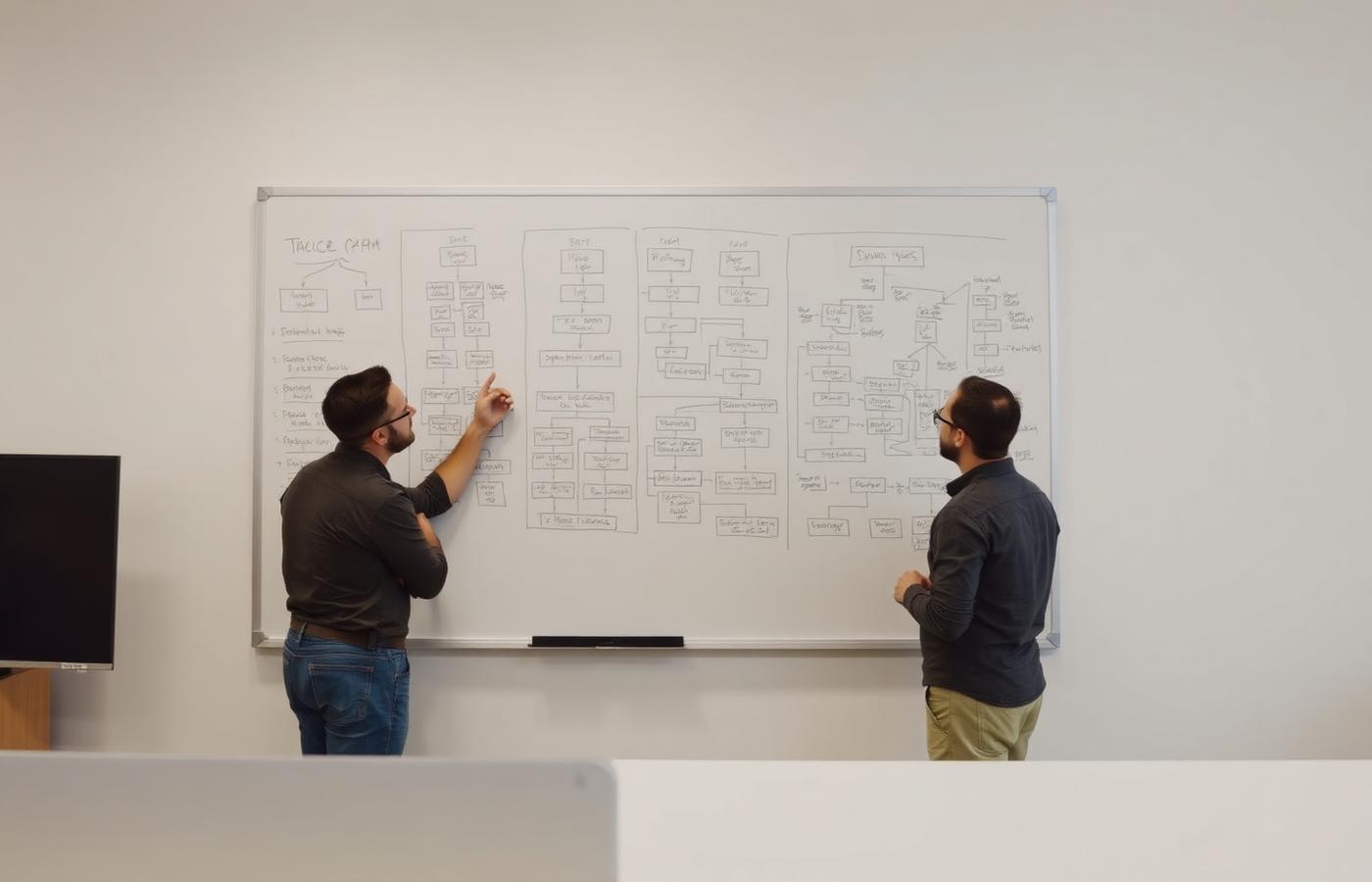
Processes held together by spreadsheets, copied files and repeated re-entry, where the cost of a mistake keeps rising.
IT services · Digital solutions · English
HAND CAR WASH SPECIALISTS LTD is an IT services and digital solutions provider. We build custom software and web applications, operate cloud infrastructure, connect systems that need to exchange data, apply practical security work, and maintain all of it once it is running.

01Company overview
We work with organisations whose daily operations depend on software: internal systems, customer-facing applications, data flows between tools, and the infrastructure underneath them. The work is rarely greenfield, and it usually involves understanding something that already exists before changing it.
Our approach is deliberately unglamorous. We write down what a system is supposed to do, build it in increments that can be reviewed, test each increment, and make the route to production the same every time. That discipline is what makes later changes affordable.
We are equally comfortable delivering a defined project, joining an existing delivery team, or taking on maintenance of a system whose original authors have moved on. Whichever shape the engagement takes, the code, configuration and documentation remain with the organisation.
02Core IT services
Six areas make up most of our work. Each is described in full, with use cases and delivery approach, on the Services page.
Applications shaped around an organisation's own processes, delivered with tests, documentation and a repeatable release path.
Responsive, accessible interfaces and portals built from shared components and measured for real-world load performance.
Environments described as code, provisioned consistently across stages, and monitored once they carry production traffic.
Contracts, validation and error handling that let applications and third-party services exchange data reliably.
Access control, dependency monitoring, configuration review and remediation carried out alongside the operating team.
Scheduled updates, fault correction with regression tests, and a defined route for reporting operational issues.
03Business challenges we solve
Processes held together by spreadsheets, copied files and repeated re-entry, where the cost of a mistake keeps rising.
Codebases without tests or documentation, where every modification carries an unclear risk of breaking something else.
Data re-keyed between tools, with no reconciliation and no reliable way to detect when an exchange has failed.
Servers configured by hand over years, with undocumented dependencies and no rehearsed recovery procedure.
Uncertainty about who holds access, which dependencies are outdated, and what would happen during an incident.
Working systems whose original authors are gone, leaving no clear route for fixes, updates or small improvements.
04 — Technology expertise
05Our working process
The sequence stays the same whether the work is a new build, a migration or an inherited system taken into maintenance.
Review the existing systems, constraints and intended outcome, and record that understanding in writing for review.
Turn the agreed understanding into a specification and a sequence of increments, each with its own acceptance criteria.
Implement in reviewable increments, with peer review, automated tests and documentation produced alongside the code.
Deploy through a repeatable pipeline into a monitored environment, with a tested rollback path defined in advance.
Watch real behaviour, apply updates on a schedule, correct faults with tests that reproduce them, and adjust priorities as needs change.
06Industries we support
The engineering problems below recur across sectors. What changes is the regulatory context, the data sensitivity and the tolerance for downtime.
Client workflow tooling, document handling and internal reporting.
Order, inventory and fulfilment integrations between platforms.
Scheduling, tracking and exchange of operational data with partners.
Production reporting, machine data collection and back-office integration.
Learning portals, enrolment processes and access management.
Administrative systems with strict confidentiality and access controls.

07Infrastructure and cloud
We treat infrastructure as part of the software. Environments are described in version-controlled definitions, so development, staging and production stay comparable and any of them can be recreated deliberately rather than reconstructed from memory.
Deployments run through pipelines that build, test and promote the same artefact. Backups are scheduled, restores are rehearsed, and monitoring covers both technical signals and the behaviour that actually matters to users.
Where an organisation already operates a suitable environment, we work within it. Migration is a recommendation only when the current arrangement creates real operational risk or cost.
08 — Cybersecurity approach
Access is granted narrowly, reviewed periodically and removed when a role or engagement ends.
Credentials live in managed secret stores, never in source control, tickets or documentation.
Third-party libraries are tracked against published advisories and updated on a schedule.
Validation, encryption in transit and safe configuration are applied from the first release, not retrofitted.
Logging and alerting are designed so an issue can be reconstructed and contained quickly.

09Quality and reliability
Any build, environment or deployment can be produced again from what is stored in version control.
Systems report enough about their own behaviour to diagnose problems without guesswork.
Every change has a defined way back, so releasing does not depend on everything going right.
The least complex solution that meets the requirement is preferred, because it will be cheaper to operate.
Decisions and operational procedures are written down while they are still fresh and verifiable.
Knowledge is shared across the engagement so no single person becomes a dependency.
10Why organisations choose us
11FAQ
12Company details and contact
Enquiries are handled in writing by email. A short description of the current systems and the outcome you are aiming for is enough to start a useful discussion.